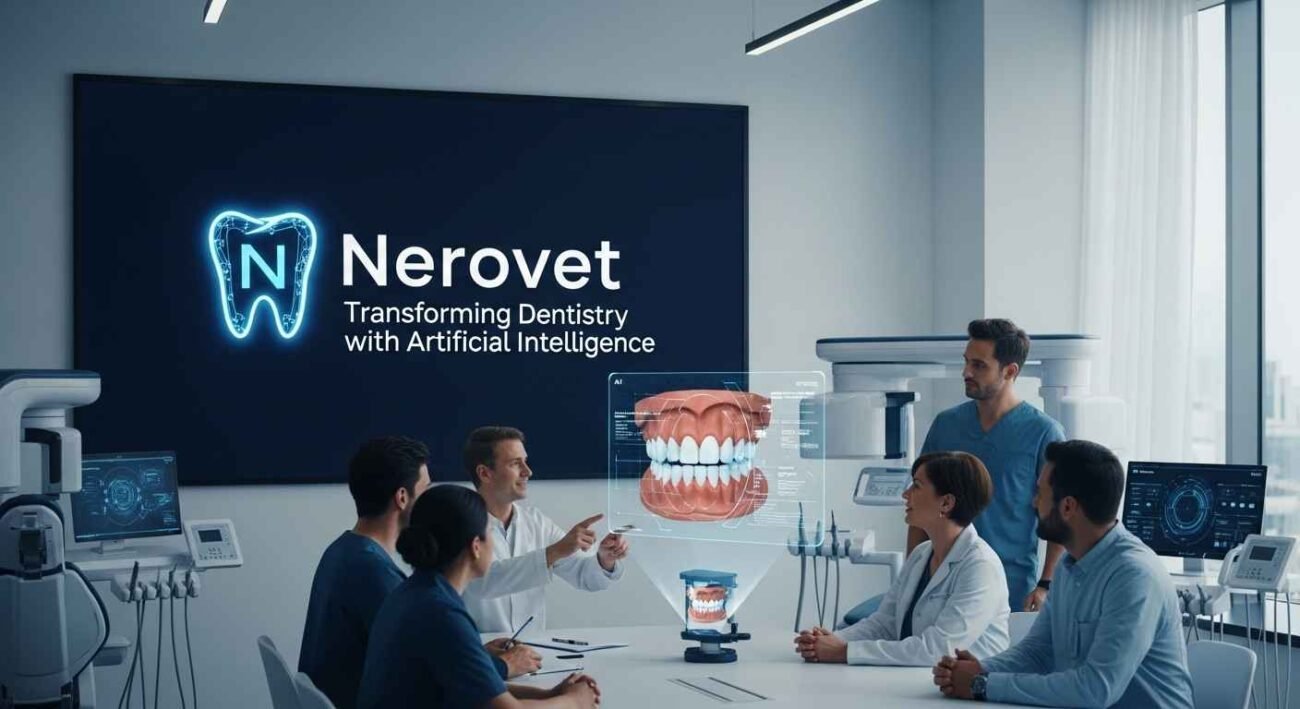
Artificial intelligence (AI) is increasingly reshaping healthcare, and dentistry is no exception. From automated diagnostics to workflow optimization, AI is allowing dental professionals to provide faster, more accurate, and patient-friendly care. One of the emerging names in this field is Nerovet AI Dental Company, a company that claims to use advanced AI technologies to improve dental diagnostics and practice efficiency. In this article, we explore the company, its technology, potential benefits, and challenges, providing a comprehensive overview of what Nerovet AI Dental represents in the modern dental industry.
The Role of AI in Dentistry
AI has revolutionized industries such as finance, logistics, and healthcare, and dentistry is increasingly adopting these technologies. The key applications of AI in dentistry include:
- Diagnostic Assistance: AI can analyze X-rays, CBCT scans, and intraoral images to detect dental issues such as cavities, bone loss, and lesions with high accuracy.
- Workflow Optimization: Automated reporting and scheduling help reduce administrative tasks, allowing dentists to focus more on patient care.
- Patient Engagement: Visual AI reports help patients understand their conditions better, improving treatment acceptance and satisfaction.
- Predictive Analytics: AI can identify patterns across patient populations, supporting preventive care and personalized treatment planning.
These advancements have created opportunities for companies like Nerovet AI Dental to develop AI-driven tools specifically tailored for dental professionals.
Introduction to Nerovet AI Dental Company
Nerovet AI Dental Company positions itself as a technology-driven platform that combines artificial intelligence with dental expertise to enhance clinical diagnostics. While the company initially focused on veterinary dentistry, its technology also has applications in human dental care. The company leverages AI algorithms to analyze dental images and provide actionable insights for dentists and veterinary professionals alike.
The core philosophy behind Nerovet AI is to provide a supportive, not replacement, role in dental decision-making. It aims to serve as a second set of eyes, reducing the risk of missed diagnoses and enhancing overall diagnostic accuracy.
Core Features of Nerovet AI Dental
A. AI-Powered Image Analysis
Nerovet AI uses advanced machine learning and computer vision algorithms to analyze dental images. The system is designed to detect abnormalities such as cavities, fractures, resorption, periodontal disease, and other dental pathologies. By automatically flagging potential issues, Nerovet AI assists dentists in prioritizing patient care.
B. Diagnostic Support
The platform provides real-time diagnostic suggestions based on image analysis. These suggestions act as a second opinion, helping clinicians confirm their diagnoses and make informed treatment decisions. The AI identifies patterns that may be subtle or easily missed, improving overall diagnostic confidence.
C. Early Detection Capabilities
Early detection of dental problems is one of Nerovet AI’s primary benefits. By identifying issues such as tooth decay, bone density changes, or lesions at an early stage, the platform allows dental professionals to intervene sooner, potentially reducing the need for invasive procedures.
D. Automated Reporting
Nerovet AI generates comprehensive reports with annotated images, measurements, and highlighted areas of concern. These reports can be shared with patients to improve communication and treatment acceptance.
E. Integration with Dental Practices
The platform is designed to integrate with existing dental imaging systems and practice management software. This ensures seamless workflow adoption without requiring extensive changes to clinic operations.
Benefits of Nerovet AI Dental
1. Enhanced Accuracy
By leveraging AI, Nerovet Dental aims to reduce human error in image interpretation. AI algorithms are trained on large datasets, which helps them recognize subtle anomalies that might be overlooked during manual review.
2. Time Efficiency
Automated analysis and reporting can significantly reduce the time dentists spend reviewing images. This efficiency allows clinicians to focus more on patient care and reduces clinic bottlenecks.
3. Better Patient Communication
Visual AI reports help patients understand their oral health conditions. Annotated images and clear explanations support treatment discussions, increasing trust and improving patient compliance.
4. Preventive Care and Early Intervention
With early detection, dental problems can be addressed before they escalate. This aligns with modern dentistry’s focus on prevention rather than reactive treatment, ultimately improving patient outcomes.
5. Workflow Optimization
By automating repetitive tasks such as report generation and image analysis, Nerovet AI frees up administrative and clinical time. This improves productivity and allows dental teams to focus on value-added activities.
How Nerovet AI Works in Practice
Step 1: Image Upload
Dentists or veterinary professionals upload dental images, including X-rays, panoramic scans, or CBCT images, to the Nerovet AI platform.
Step 2: AI Analysis
The system uses deep learning algorithms to process the images. It identifies patterns associated with common dental conditions, highlights potential issues, and generates preliminary findings.
Step 3: Review and Validation
Dentists review the AI-generated results. The platform serves as a supportive tool, allowing clinicians to confirm or adjust diagnoses based on their professional judgment.
Step 4: Reporting and Communication
Nerovet AI generates detailed reports with annotated images, measurement data, and diagnostic suggestions. These reports can be shared with patients or stored in practice management systems for record-keeping.
Industry Context: AI in Dentistry
The dental industry is increasingly adopting AI technologies due to the growing demand for precision, efficiency, and patient-centered care. Several major trends in AI dentistry include:
- Radiographic Analysis: AI systems detect cavities, fractures, and bone loss with accuracy comparable to human specialists.
- Predictive Modeling: AI predicts potential risks for patients based on historical data, aiding preventive care strategies.
- Digital Dentistry: AI integrates with CAD/CAM systems for prosthetic design, orthodontic planning, and implant placement.
- Tele-dentistry: AI supports remote consultation by analyzing images sent by patients or local clinics.
Nerovet AI fits into this broader context as a platform focused on diagnostic support, early detection, and workflow enhancement.
Limitations and Challenges
While Nerovet AI offers significant benefits, there are challenges to consider:
A. Limited Public Validation
As of now, there is limited publicly available clinical data validating Nerovet AI’s accuracy and performance in real-world dental settings. Clinicians should approach with caution and seek internal testing or pilot trials.
B. Regulatory Considerations
AI in dentistry is subject to regulatory oversight in many countries. It is essential to confirm whether Nerovet AI has appropriate approvals (e.g., FDA, CE marking) before clinical deployment.
C. Human Oversight Required
AI is a supportive tool, not a replacement for clinical judgment. Dentists remain responsible for final diagnosis and treatment planning. Overreliance on AI without verification could lead to errors.
D. Integration Challenges
While the platform claims compatibility with various systems, real-world integration may require IT support, staff training, and workflow adjustments.
Best Practices for Implementing AI in Dental Practices
For dentists considering Nerovet AI or similar platforms, the following best practices are recommended:
- Pilot Testing: Implement the AI system in a controlled setting to evaluate its accuracy and workflow impact.
- Staff Training: Ensure all clinical staff understand how to interpret AI outputs responsibly.
- Evaluate Clinical Evidence: Request validation studies, sensitivity, and specificity data to assess reliability.
- Regulatory Compliance: Confirm regulatory approvals to ensure legal and ethical deployment.
- Patient Communication: Use AI-generated reports to enhance patient understanding but always explain that AI is a support tool, not a definitive diagnosis.
Nerovet AI Dental and Veterinary Dentistry
Interestingly, Nerovet AI has a strong focus on veterinary dental care. Pets often experience dental disease that is difficult to detect early. Nerovet AI’s algorithms aim to analyze veterinary dental images, providing veterinarians with diagnostic insights and early detection capabilities.
This dual focus on human and veterinary applications demonstrates the flexibility of AI in analyzing dental images across species, highlighting Nerovet AI’s potential in multiple markets.
Future of AI in Dentistry
The future of AI in dentistry is poised for growth. Potential developments include:
- Real-time AI feedback during dental procedures
- Integration with 3D imaging and intraoral scanners
- Predictive modeling for personalized treatment plans
- Enhanced tele-dentistry with AI-assisted diagnosis
- Automated workflow management, including scheduling, billing, and follow-up reminders
Platforms like Nerovet AI may evolve to integrate these advancements, creating a comprehensive AI-powered dental ecosystem.
Conclusion
Nerovet AI Dental Company represents a promising step toward AI-assisted dentistry. By leveraging artificial intelligence to analyze dental images, provide diagnostic support, and optimize workflow, the platform addresses key challenges in modern dental practice. Its potential benefits include enhanced diagnostic accuracy, time efficiency, better patient communication, and early detection of dental problems.
However, dental professionals should adopt Nerovet AI cautiously, ensuring human oversight, evaluating clinical validation, and verifying regulatory compliance. AI is a tool to augment clinical expertise, not replace it. When implemented responsibly, Nerovet AI and similar platforms may significantly transform dentistry, improving outcomes for both patients and dental professionals.
