
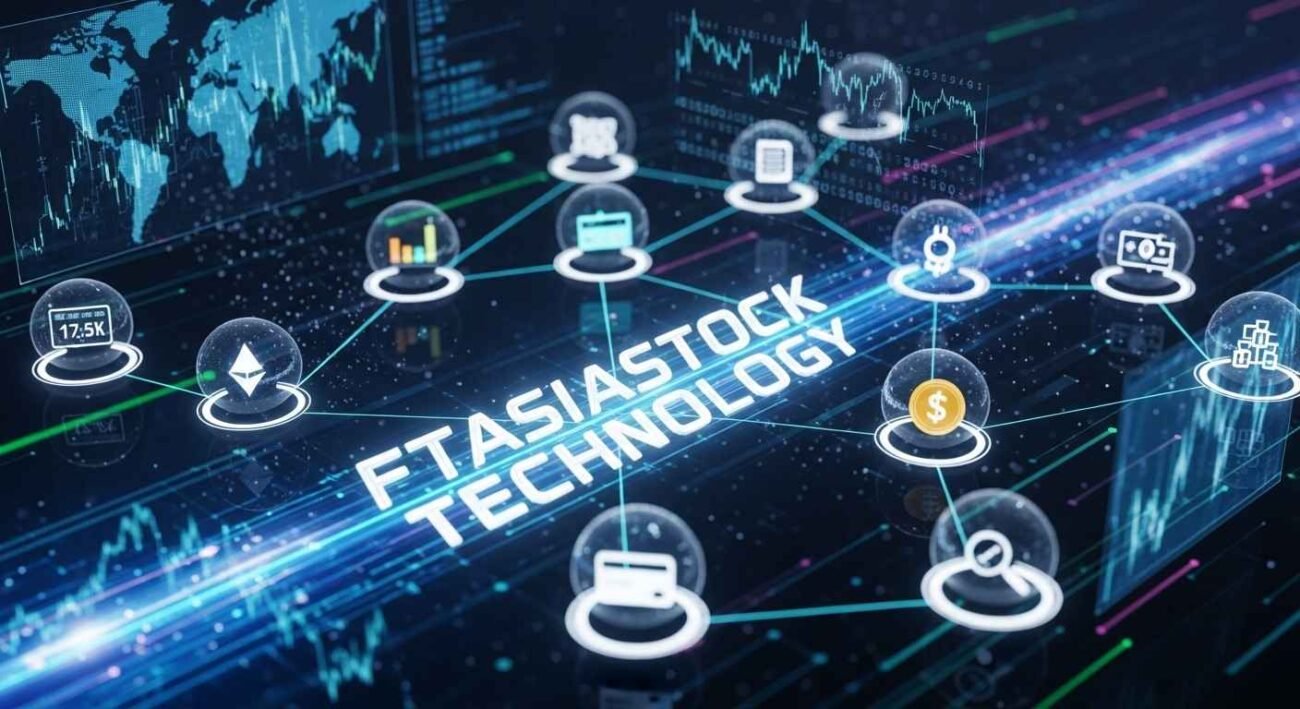
What Is ftasiastock Technology?
Ftasiastock technology refers to a modern digital framework that integrates advanced computing, real‑time data analysis, and intelligent algorithms to support financial decision‑making and business insights. Unlike legacy systems that rely on manual data feeds and human interpretation, ftasiastock uses automation and machine learning to process large datasets instantly. The term has emerged in fintech and financial innovation circles as a way to describe systems that combine financial analytics with intelligent automation to deliver smarter, faster insights.
At its core, ftasiastock technology is built around the idea that data should be both accessible and actionable. Financial markets, especially those in dynamic regions like Asia, generate enormous volumes of information every second. Prices, orders, economic indicators, geopolitical shifts, and sentiment signals all blend together in a highly complex environment. Ftasiastock technology helps users make sense of this complexity by distilling raw data into meaningful signals that can guide investment strategies or business decisions.
Importantly, ftasiastock technology is not limited to a single product or software package. Instead, it represents a fusion of technologies — including artificial intelligence, cloud computing, predictive analytics, and real‑time monitoring tools — that work together to create an ecosystem capable of supporting investors, traders, and enterprise users. Its primary purpose is to reduce uncertainty and empower users with information that feels timely, trustworthy, and relevant.
Core Components of the Technology
At the heart of ftasiastock technology are several integrated components that enable its advanced capabilities. The first of these is artificial intelligence (AI), which plays a central role in analyzing massive datasets. AI models can recognize patterns, learn from historical trends, and adjust predictions over time. By doing so, they help users anticipate potential future movements in markets or business performance rather than merely reporting what has already occurred.
Another essential element is big data analytics. Financial and operational data today is too vast and too fast to be processed by traditional tools. Big data systems capture diverse streams of information — from stock prices and trading volume to economic releases and news sentiment — and organize it into a format that can be analyzed efficiently. This enables the system to identify correlations and emerging trends that might otherwise go unnoticed.
Cloud computing infrastructure also plays a vital role. Unlike on‑premise systems that require significant hardware investments and maintenance, cloud‑based architectures offer scalability, resilience, and flexibility. Whether handling light data loads or surges in information during market volatility, cloud systems adjust dynamically to meet demand without downtime. This scalability ensures that ftasiastock technology remains responsive, reliable, and capable of serving both individual users and institutional clients alike.
How It Transforms Financial Markets
One of the most significant applications of ftasiastock technology is in financial markets, where speed and accuracy can determine the success of trading strategies. Traditional market analysis often falls behind real‑time conditions because it depends on delayed data, manual interpretation, or static models. In contrast, ftasiastock systems process live data feeds from exchanges, economic indicators, and even social sentiment streams, creating a continuous flow of insights.
For investors and traders, this real‑time processing means being able to respond quickly to market shifts. For example, if a major economic announcement suddenly affects currency values or stock indices, systems powered by ftasiastock technology can alert users immediately. Predictive models may even forecast potential reactions before they fully unfold, giving users a strategic edge.
Beyond simple alerts, ftasiastock technology supports scenario planning. Traders can test how specific market conditions might play out under different variables, such as changes in interest rates, geopolitical events, or corporate earnings surprises. This ability to simulate outcomes helps users refine their strategies with greater confidence. Over time, as machine learning models adapt and improve, these simulations become more nuanced, helping users anticipate subtler shifts in market behavior.
Benefits for Investors and Traders
Investors and traders benefit from ftasiastock technology in several key ways. First, it enhances speed and accuracy. Markets today move quickly, and the ability to process information as it arrives can make the difference between seizing an opportunity or missing it entirely. By automating data analysis, ftasiastock systems reduce reliance on manual processes that are slower and more error‑prone.
Second, these technologies promote smarter decision‑making. Instead of making choices based on limited snapshots of information, users can rely on comprehensive, continuously updated data streams. Insights generated through predictive analytics and machine learning help users anticipate potential market trends rather than reacting only after trends develop.
Third, accessibility increases. Historically, advanced analytical tools were available only to institutional investors with dedicated research teams. Ftasiastock technology democratizes access to sophisticated insights, enabling individual traders and smaller firms to benefit from capabilities that were once exclusive to large institutions. By leveling the information playing field, the technology empowers a broader range of users to participate more effectively in global financial markets.
Applications Beyond Finance
While finance remains a central domain, ftasiastock technology has applications that extend far beyond traditional market trading. In business operations, for example, predictive analytics and real‑time monitoring tools can improve supply chain efficiency. Companies can forecast demand more accurately, optimize inventory levels, and reduce waste by anticipating changes in consumer behavior or supplier performance.
In logistics and manufacturing, real‑time data platforms help coordinate complex networks of production, transportation, and delivery. By identifying bottlenecks early and suggesting alternatives, these systems minimize downtime and enhance operational resilience. For industries facing high uncertainty — such as retail dealing with seasonal fluctuations or global disruptions — such insights can be transformative.
Additionally, customer behavior analysis benefits from similar technology frameworks. Companies can track engagement, sentiment patterns, and purchasing trends to tailor marketing strategies more effectively. By understanding what motivates consumers in real time, businesses can adjust their offers, promotions, and service experiences to drive better outcomes.
Challenges and Limitations
Despite its many advantages, ftasiastock technology also presents challenges that users and organizations must navigate. One of the most notable is the learning curve associated with advanced analytics and machine learning systems. While these tools are powerful, extracting meaningful insights requires a certain level of expertise. Users may need training to interpret predictive signals accurately and integrate them effectively into decision‑making frameworks.
Data security and privacy represent additional concerns. Because ftasiastock systems process sensitive financial and business information, they must adhere to strict cybersecurity standards. Any breach could lead to financial losses, reputational damage, or regulatory penalties. Ensuring robust protection across cloud environments, APIs, and user interfaces is a continuous priority for technology providers and adopters alike.
Regulatory complexity also plays a role, especially in cross‑jurisdictional contexts. Financial markets and data protection laws vary significantly around the world, and platforms that operate across borders must navigate these differences carefully. Compliance with regulatory frameworks adds layers of cost and complexity, particularly for firms seeking to scale globally.
The Role of Artificial Intelligence
Artificial intelligence is central to the evolution of ftasiastock technology. By enabling systems to learn from historical data and adapt to new conditions, AI transforms static analysis into dynamic insight generation. Machine learning models identify subtle patterns that human analysts might miss and refine predictions over time with every new data point.
AI also enables natural language processing (NLP), which allows systems to interpret unstructured data such as news reports, social media sentiment, and analyst commentary. This capability expands the scope of input beyond traditional numerical data, giving users a richer understanding of market sentiment and emerging risks. For example, an abrupt shift in online sentiment about a particular company or sector might signal future volatility in its stock price before traditional indicators reflect the change.
Furthermore, AI supports automation across repetitive workflows. Tasks like data cleaning, risk scoring, and back‑testing are labor‑intensive when done manually but become almost instantaneous with intelligent automation. This not only saves time and reduces errors but also frees human analysts to focus on strategy and interpretation rather than routine processes.
Future Outlook and Emerging Trends
Looking ahead, the future of ftasiastock technology appears poised for continued advancement. Innovations in machine learning models, real‑time computing power, and connected analytics are pushing the boundaries of what these systems can achieve. As data sources continue to proliferate — including Internet of Things (IoT) sensors, alternative financial datasets, and global economic indicators — platforms that can integrate and interpret diverse inputs will become increasingly valuable.
Integration with blockchain and decentralized finance (DeFi) systems is also emerging as a trend. These technologies promise greater transparency, immutability, and trustless transaction processing, which may complement existing analytics frameworks. If ftasiastock platforms incorporate decentralized elements, users could benefit from enhanced security and broadened access to new asset classes.
As globalization deepens and markets become more interconnected, the demand for systems that deliver rapid insight and clear foresight will only grow. From individual investors seeking smarter tools to multinational enterprises optimizing global operations, ftasiastock technology represents a powerful and evolving frontier in digital transformation. With continued innovation and thoughtful governance, it is poised to shape how decisions are made in finance, business, and beyond.
Conclusion
Ftasiastock technology represents a significant leap in the way businesses and investors handle complex data. By combining artificial intelligence, big data analytics, and cloud-based infrastructure, it transforms raw information into actionable insights, enabling faster, smarter decision-making. Its applications stretch beyond financial markets into supply chain management, operations optimization, and customer behavior analysis, making it a versatile tool for modern enterprises.
While adoption comes with challenges such as technical learning curves, regulatory compliance, and cybersecurity considerations, the benefits — including increased efficiency, predictive accuracy, and accessibility — outweigh the obstacles. As AI, machine learning, and real-time analytics continue to evolve, ftasiastock technology is poised to become an essential component of the digital landscape. For investors, businesses, and innovators, it offers a pathway to better-informed strategies, more resilient operations, and a competitive edge in a rapidly changing world.
