
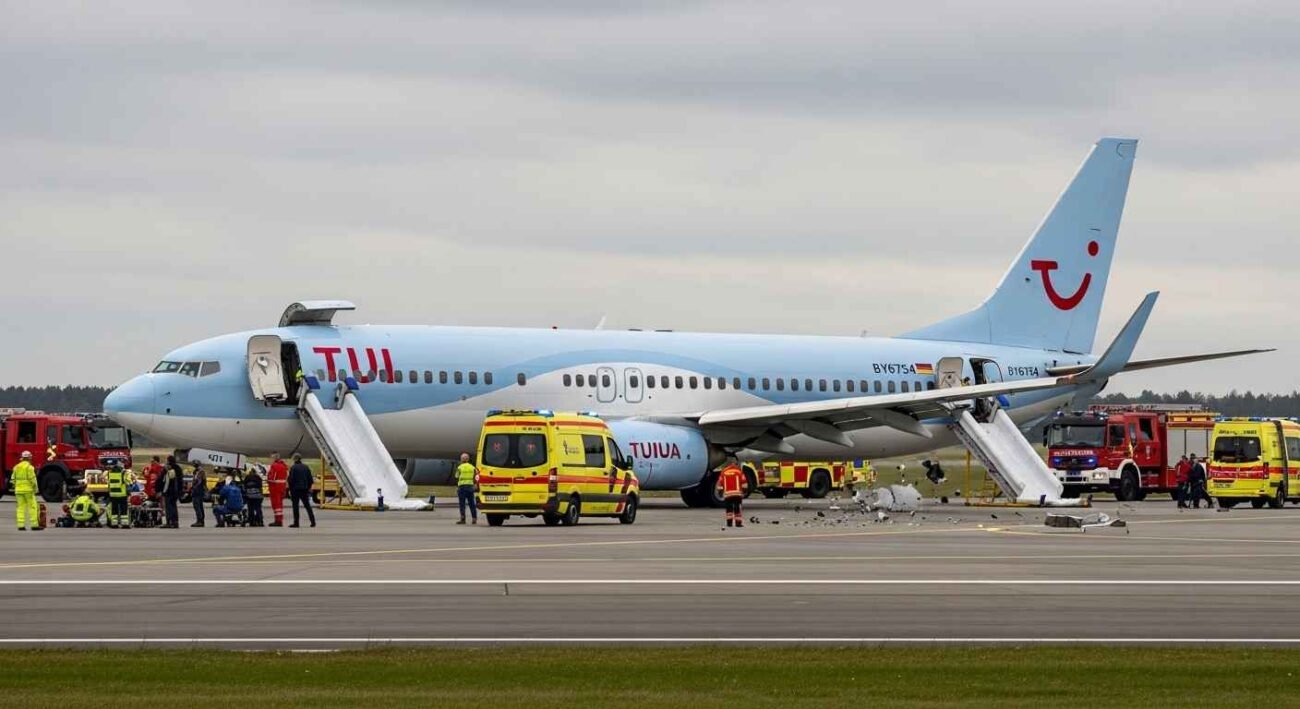
On September 28, 2025, TUI Airways flight BY6754, departing from Cardiff Airport (CWL) in the United Kingdom and destined for Paphos, Cyprus, experienced a critical in-flight emergency just minutes after takeoff. This incident, which led to a precautionary emergency landing at Birmingham Airport (BHX), garnered widespread attention due to the swift actions of the flight crew, the technical nature of the emergency, and the safety protocols followed by all parties involved.
This article will take you through the entire sequence of events, including the emergency itself, the probable causes, aviation safety protocols, and a deeper dive into how these kinds of emergencies are handled in the airline industry. We will also explore the experience of the passengers, the airline’s response, and the lessons to be learned from such incidents.
The Overview of TUI Flight BY6754
Before we get into the specifics of the emergency, let’s first take a quick look at the flight details to understand the context of the incident:
- Airline: TUI Airways
- Flight Number: BY6754
- Aircraft Type: Boeing 737-800
- Registration: G-TAWY
- Route: Cardiff (CWL) to Paphos (PFO), Cyprus
- Departure: 16:28 local time
- Emergency Declaration: Shortly after takeoff
- Landing: Emergency landing at Birmingham Airport (BHX)
- Outcome: Safe landing; no injuries or casualties
The aircraft was originally supposed to fly from Cardiff Airport in the UK to Paphos in Cyprus. However, during the early stages of the flight, shortly after takeoff, the flight crew was alerted to an issue, and the aircraft was forced to return to a safe location for an emergency landing. Fortunately, all passengers on board were unharmed.
What Happened: The Timeline of Events
Here is a detailed timeline of the events that unfolded during the emergency:
16:28 – Departure from Cardiff
The flight BY6754 took off from Cardiff Airport (CWL) at approximately 16:28 local time. The aircraft, a Boeing 737-800, was climbing out of Cardiff’s airspace en route to Paphos, Cyprus, with a full load of passengers on board. It was a routine departure with no immediate signs of irregularities.
16:30 – In-Flight Emergency Declaration
Just a couple of minutes into the flight, the flight crew became aware of a significant issue. Though details of the problem were initially unclear, reports suggested that there was a technical malfunction related to the engine. In some reports, a bird strike was also mentioned as a possible cause for the emergency, though this has not been officially confirmed. The pilots quickly assessed the situation and made the decision to declare an emergency.
In aviation, when a serious in-flight issue arises, the pilots activate the emergency code 7700 on the transponder. This code is universally recognized by air traffic controllers around the world and signals a general emergency on board. It immediately alerts air traffic controllers to prioritize the aircraft and provide assistance in handling the situation.
16:35 – Holding Pattern and Fuel Dumping
After declaring the emergency, the flight crew opted to initiate a holding pattern over the surrounding airspace. Holding patterns are a common tactic used in aviation emergencies to give the crew enough time to assess the situation, burn fuel (if necessary), and prepare for an emergency landing. The aircraft circled above the Cardiff area, burning fuel to reduce the aircraft’s weight and allow for a safer landing.
16:45 – Decision to Divert to Birmingham Airport
After the crew evaluated the situation and consulted with air traffic control, it was decided to divert the aircraft to Birmingham Airport (BHX) rather than returning to Cardiff. The decision to land at Birmingham was likely made for several reasons: Birmingham is a large airport with more extensive emergency services, a longer runway, and better facilities for handling unexpected situations.
This decision is not unusual in emergencies — larger airports often provide more flexibility and safety options when compared to smaller, regional airports.
17:00 – Approach to Birmingham Airport
As the aircraft approached Birmingham, the flight crew initiated the approach procedure for landing. Emergency services, including fire trucks and medical teams, were placed on standby at Birmingham to respond immediately should anything go wrong during the landing. This is a standard procedure when an aircraft declares an emergency.
17:29 – Safe Emergency Landing at Birmingham
At 17:29 BST, TUI Flight BY6754 made a successful emergency landing at Birmingham Airport (BHX). The aircraft touched down without any significant issues, and emergency services were present to ensure that the aircraft could be evacuated and inspected immediately. The landing was smooth, and there were no reported injuries among the 180+ passengers on board.
Possible Causes of the Emergency
The exact cause of the emergency remains the subject of investigation, but several plausible scenarios have emerged based on initial reports:
Engine Issue
One of the main theories circulating after the incident is that there was a technical malfunction related to one of the aircraft’s engines. Modern commercial aircraft like the Boeing 737-800 are equipped with advanced monitoring systems that can detect when something goes wrong with the engine. In such cases, the crew is trained to respond quickly to mitigate any risks. If there is any sign of engine failure or malfunction, the pilots will often opt to land at the nearest available airport to ensure the safety of everyone on board.
Bird Strike
Another possible cause that has been speculated is a bird strike, which occurs when an aircraft collides with a bird during takeoff or flight. Bird strikes can be dangerous if the bird impacts the engine or critical flight components, potentially leading to an emergency landing. Although there was no official confirmation of this, bird strikes are a known hazard in aviation and are a common cause of in-flight diversions.
Mechanical Failure or System Error
Another explanation could be a mechanical failure in one of the aircraft’s systems. Aircraft are complex machines with many interdependent systems, including hydraulics, avionics, and electrical systems. A failure in one of these systems could trigger the need for an emergency landing. In such cases, the pilots would follow established emergency protocols to ensure the safety of the passengers and crew.
Aviation Safety Protocols: What Happens in an Emergency?
When an emergency is declared during a flight, it triggers a series of well-established procedures designed to maximize safety. Here’s how the process typically unfolds:
Declaring the Emergency: Squawk 7700
As mentioned earlier, the first step in an aviation emergency is for the flight crew to squawk 7700. This transponder code sends an immediate distress signal to air traffic control, informing them that the aircraft is in a critical situation. Air traffic controllers then prioritize the flight, clear airspace, and provide any necessary assistance.
Holding Patterns and Fuel Dumping
Once an emergency is declared, the flight may enter a holding pattern to allow the crew time to assess the situation and prepare for an emergency landing. If necessary, the aircraft may need to dump fuel to reduce its weight before landing, ensuring that the aircraft meets the required landing weight for a safe touchdown.
Emergency Landing and Diversion
After the situation has been assessed, the pilots will make the decision to land at the nearest available airport. This decision takes into account factors like the condition of the aircraft, the distance to the airport, weather conditions, and the availability of emergency services. In this case, the aircraft was diverted to Birmingham Airport, a large facility with the necessary resources to handle emergencies.
Fire and Rescue Teams on Standby
When an emergency landing is imminent, airports position fire and rescue teams along the runway and at other strategic points. While these teams may not be needed in every case, they are ready to respond immediately in the event of a fire, fuel leak, or any other safety concern.
Passenger and Crew Experience
While the exact experiences of the passengers on TUI Flight BY6754 are still not fully documented, reports from social media and aviation blogs suggest the following:
- Calm Atmosphere: Passengers were informed of the emergency by the crew and were reportedly calm during the event. The flight attendants ensured that everyone remained seated and followed safety procedures.
- Passenger Reactions: Many passengers reported that they felt reassured by the professionalism and transparency of the flight crew. Some passengers expressed that they felt confident in the crew’s ability to handle the situation.
- Disembarkation: After the aircraft safely landed at Birmingham, passengers were able to disembark normally, and there were no reports of injuries or significant distress.
In an aviation emergency, crew members play a crucial role in maintaining calm and ensuring the safety of passengers. It appears that the crew on BY6754 executed their duties flawlessly during the emergency.
TUI Airways: Airline Safety and Standards
TUI Airways, a major leisure airline in the UK, operates a fleet primarily composed of Boeing 737s and 787s. It has an excellent safety record and adheres to strict regulatory safety standards set by aviation authorities in the UK and Europe.
TUI’s flight safety protocols are in line with industry norms, ensuring that pilots, crew members, and ground operations are well-prepared to handle any in-flight emergencies. Even though this incident was highly unusual, TUI Airways has a history of successfully managing such situations, and the emergency landing of BY6754 is a testament to the airline’s ability to prioritize safety.
The Role of Birmingham Airport in the Emergency
Birmingham Airport played a key role in the success of the emergency landing. The airport’s emergency services were on standby, ready to respond if necessary. The airport has a well-established emergency response plan for such incidents, which includes activating fire and rescue teams, adjusting runway operations, and ensuring that all necessary resources are available.
Aviation Industry: What Can We Learn from This Incident?
While aviation remains one of the safest modes of transportation, incidents like these serve as reminders of the importance of safety protocols, pilot training, and emergency preparedness. Here are some key takeaways:
- Precautionary Measures Matter: TUI Airways’ decision to divert to Birmingham and its successful emergency landing demonstrate the importance of preparedness and contingency planning in aviation.
- The Safety of Passengers is Priority: Crew members are trained to remain calm and act decisively in emergency situations, ensuring the safety of everyone on board.
- Aviation Technology and Monitoring Systems: The aircraft’s advanced monitoring systems are critical in detecting issues early, which allows pilots to take appropriate action in time.
Conclusion
The emergency landing of TUI Flight BY6754 was a textbook example of how aviation safety protocols can successfully handle in-flight emergencies. Thanks to the quick actions of the flight crew and the support of air traffic controllers and Birmingham Airport’s emergency services, the aircraft landed safely, and all passengers were unharmed.
While the exact cause of the emergency remains under investigation, this incident reinforces the critical role of emergency procedures in aviation and serves as a reminder of the complexities involved in managing modern air travel safely.
